Case Study: Scaling Battery Charging for Medical Device Manufacturing
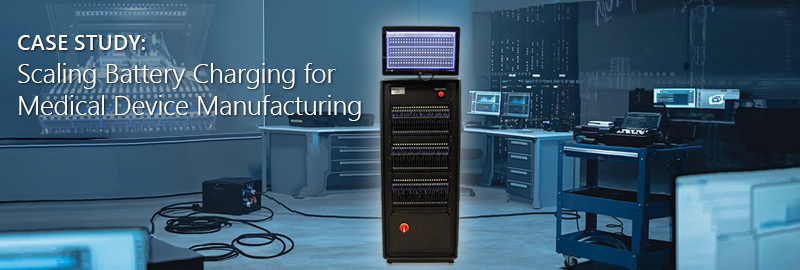
Helping a global device manufacturer reliably charge and monitor dozens of devices simultaneously during production.
The Challenge
A global manufacturer of diabetes management devices needed a reliable way to charge large volumes of mobile-based medical devices during production.
Each device operates on a smartphone-based platform and must reach a specific battery charge level before moving to the next stage of manufacturing. The existing workflow did not provide an efficient way to charge and monitor dozens of devices simultaneously while ensuring strict quality control.
Charging dozens of devices at once created several challenges:
- Ensuring every device reaches the required charge percentage
- Monitoring device charging status in real time
- Preventing devices from leaving the station before they are ready
- Providing operators with clear visibility into system status
- Integrating with the device’s internal battery management system
The manufacturer needed a scalable charging solution that could operate reliably within a high-volume production environment.
The Solution
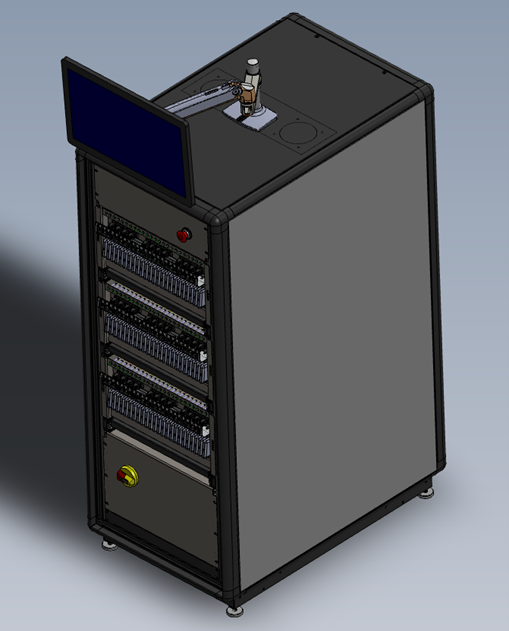
Stress Engineering Services developed a custom modular battery charging station designed specifically for high-volume medical device production. The system combines hardware infrastructure, integrated software control, and real-time monitoring tools that allow operators to manage large batches of devices efficiently. The result is a scalable charging platform capable of charging and monitoring 72 devices simultaneously, while ensuring each device independently reaches the required battery charge level.
System Overview
High-Capacity Modular Charging
The charging cabinet uses a modular rack-based architecture designed for manufacturing scalability.
System Capacity:
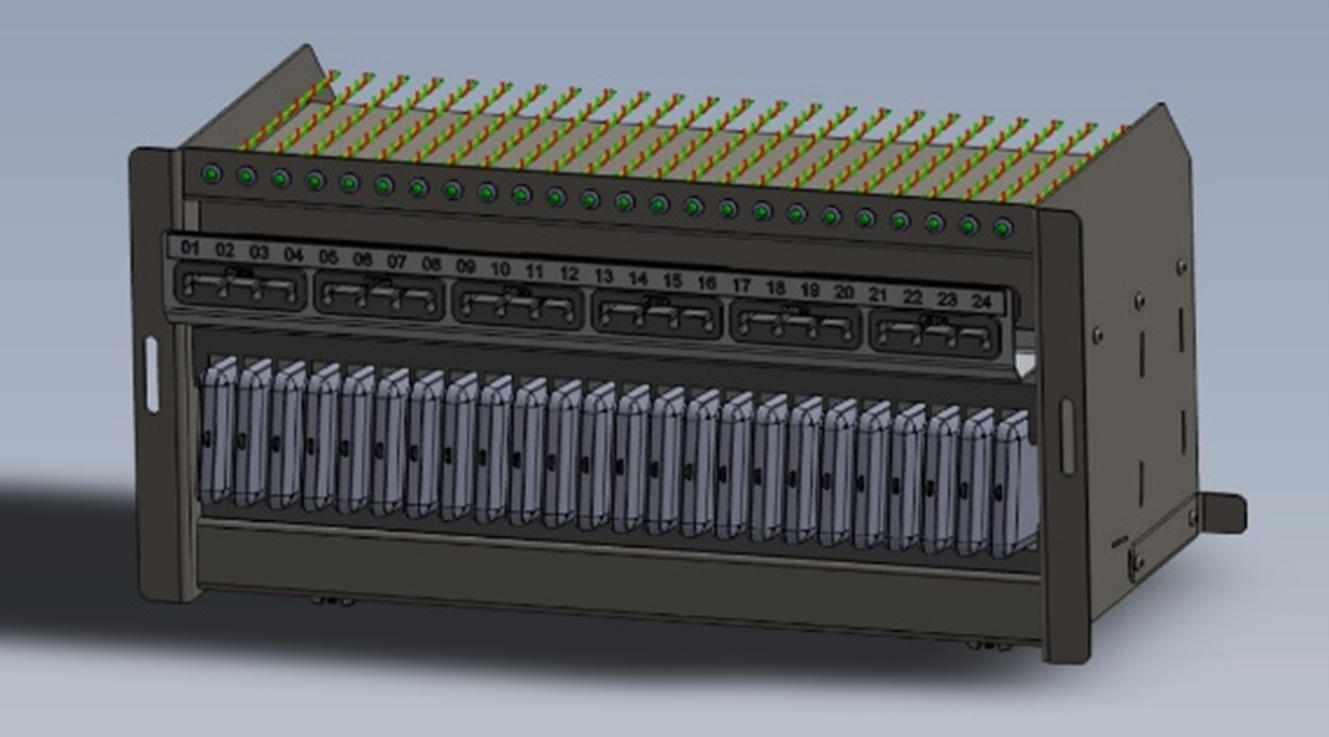
- 72 devices charged simultaneously
- 3 charging modules per cabinet
- 24 devices per module
- Expandable architecture for future production needs
This modular structure allows manufacturers to increase capacity without redesigning the entire system.
Intelligent Device Communication
To confirm the actual battery state of charge, the system communicates directly with each device using multiple data streams.
The system integrates:
- Device data acquisition
- Android Debug Bridge (ADB) communication
- Charging hub monitoring
By combining these sources, the charging station verifies the battery percentage reported by the device’s internal charge controller. This ensures devices meet the required charge level before moving to the next stage of production.
Operator-Friendly Interface
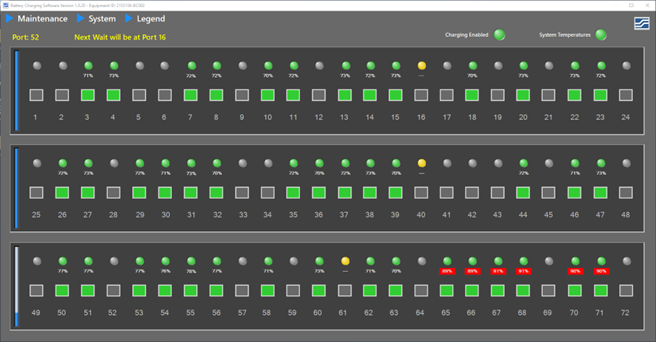
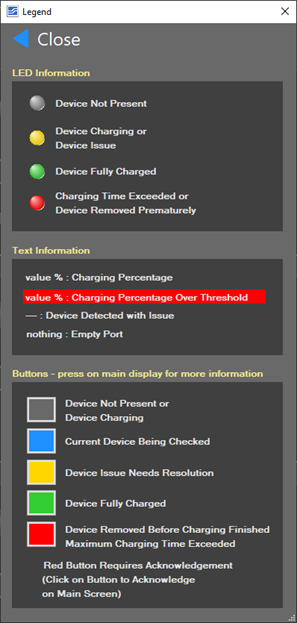
The system includes a touchscreen operator interface that provides real-time visibility into device charging status. Operators can view detailed information for every charging slot, including:
- Device ID
- Battery charge percentage
- Charging duration
- Current draw
- Port voltage
LED indicators on the cabinet mirror the touchscreen interface, allowing operators to quickly confirm charging status at a glance.
Built-In Safety and Quality Controls
Manufacturing environments require systems that protect both devices and workflows. The charging station includes multiple safeguards designed to maintain quality and prevent errors.
Early Removal Detection – If a device is removed before reaching the required charge level, the system alerts the operator and disables the port until an authorized override is performed.
Overcharge Identification – Devices entering the station already above the required charge threshold are automatically flagged.
System Health Monitoring – The system continuously monitors electrical current, power delivery, and charging hub performance. If abnormal conditions occur, charging operations can automatically shut down.
A physical cabinet control also allows operators to manually stop the system.
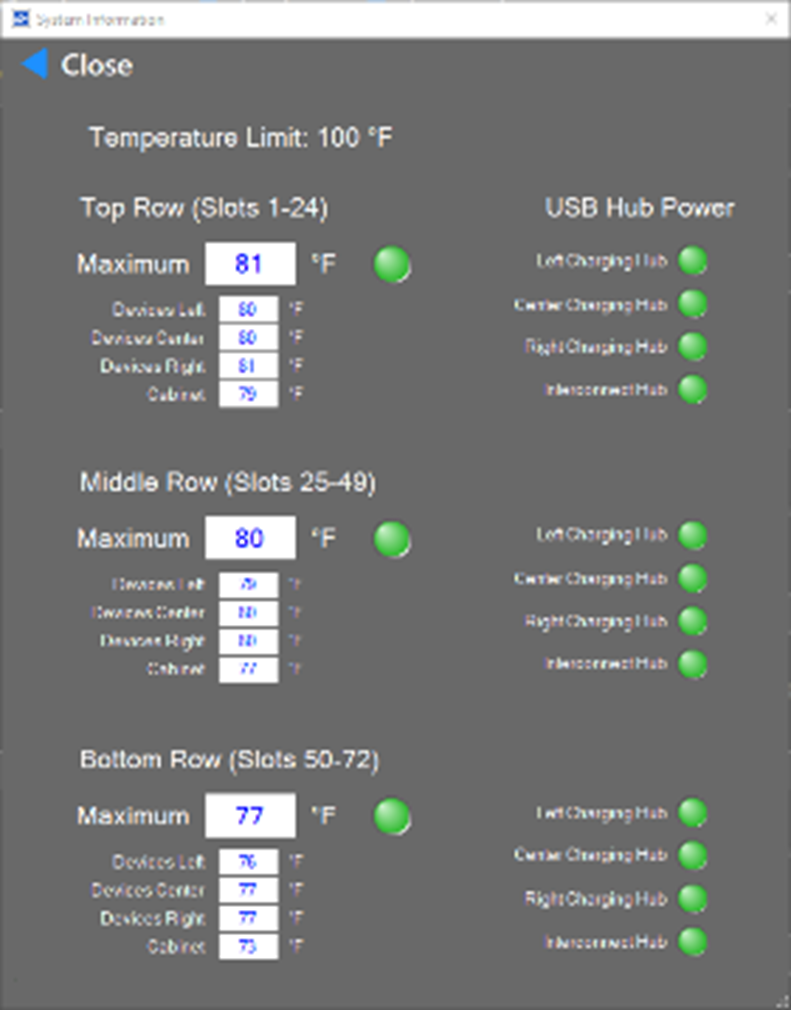
Thermal Monitoring for Safe Operation
- Charging dozens of devices in a compact space requires careful thermal management.
- Each charging module includes four temperature sensors that monitor heat distribution across the cabinet.
- These sensors help ensure safe operation during continuous production cycles.
Maintenance and Diagnostics
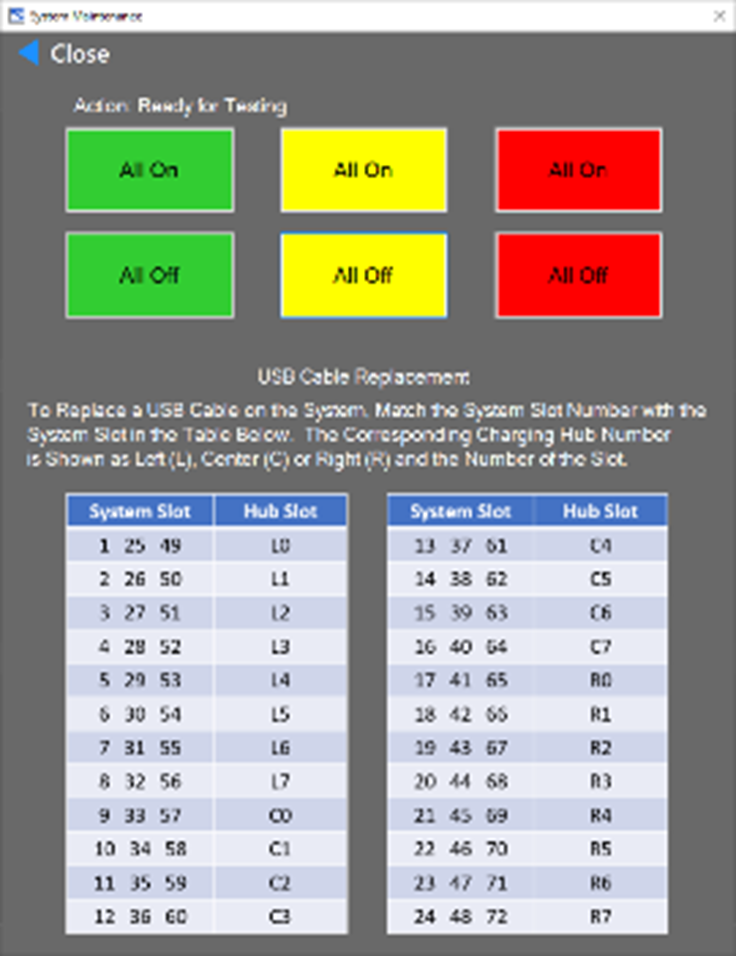
The charging station includes a dedicated maintenance mode for diagnostics and system servicing.
When activated:
- Charging operations pause
- Charging slots are disabled
- LED indicators can be tested
Once maintenance is complete, the system automatically returns to normal charging operations.
Results
The custom charging station provided the manufacturer with a reliable and scalable solution for device production.
Impact
- 72 devices charged simultaneously
- Accurate verification of device battery charge levels
- Improved operator visibility and workflow efficiency
- Enhanced safety through automated monitoring
- Modular architecture supporting production growth
The charging station now plays a key role in ensuring every device leaves the manufacturing process properly charged and ready for deployment.
Conclusion
Stress Engineering Services delivered a scalable charging system that ensures medical devices reach the required battery state before moving through production. By integrating mechanical design, controls, and software development, the team rapidly delivered a reliable solution tailored to the client’s manufacturing environment. The result is a practical, production-ready system built to support demanding medical device workflows.
About Stress Engineering Services
Stress Engineering Services develops custom automation, testing systems, and production tools for complex engineering environments. Our teams combine mechanical engineering, controls development, and system integration expertise to deliver reliable solutions for demanding industries.

Donnie Curington – Principal at Stress Engineering Services
Donnie is a mechanical engineer, an accomplished problem solver, and a versatile software developer with over 30 years of experience. He specializes in designing and implementing bespoke software-driven control systems that leverage predictive analytics to deliver smarter, more adaptive technologies across new product development, advanced manufacturing equipment, and full-scale laboratory test platforms.


Leave a Comment
You must Register or Login to post a comment.